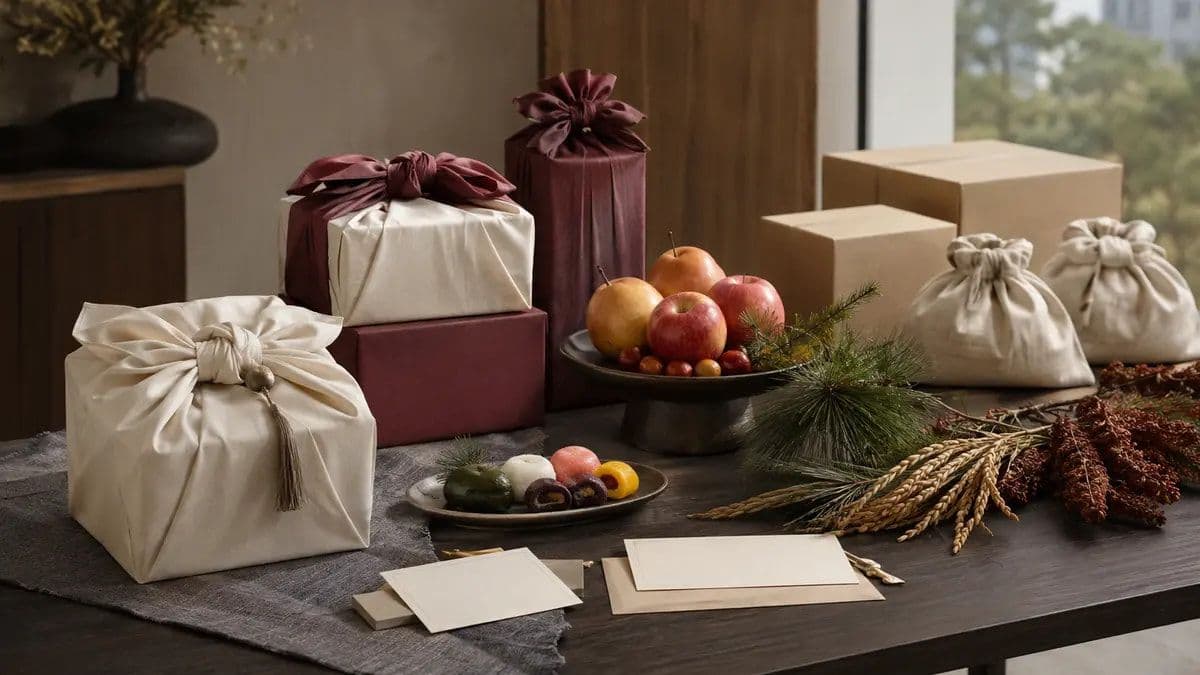


Chuseok is one of Korea’s most important holidays, and a corporate gift can either make respect tangible or turn a warm gesture into an operational problem. For 2026, the holiday falls on Friday, September 25. Teams planning for Korea should treat that date as the end of a careful workflow—not the beginning of a last-minute shipment.
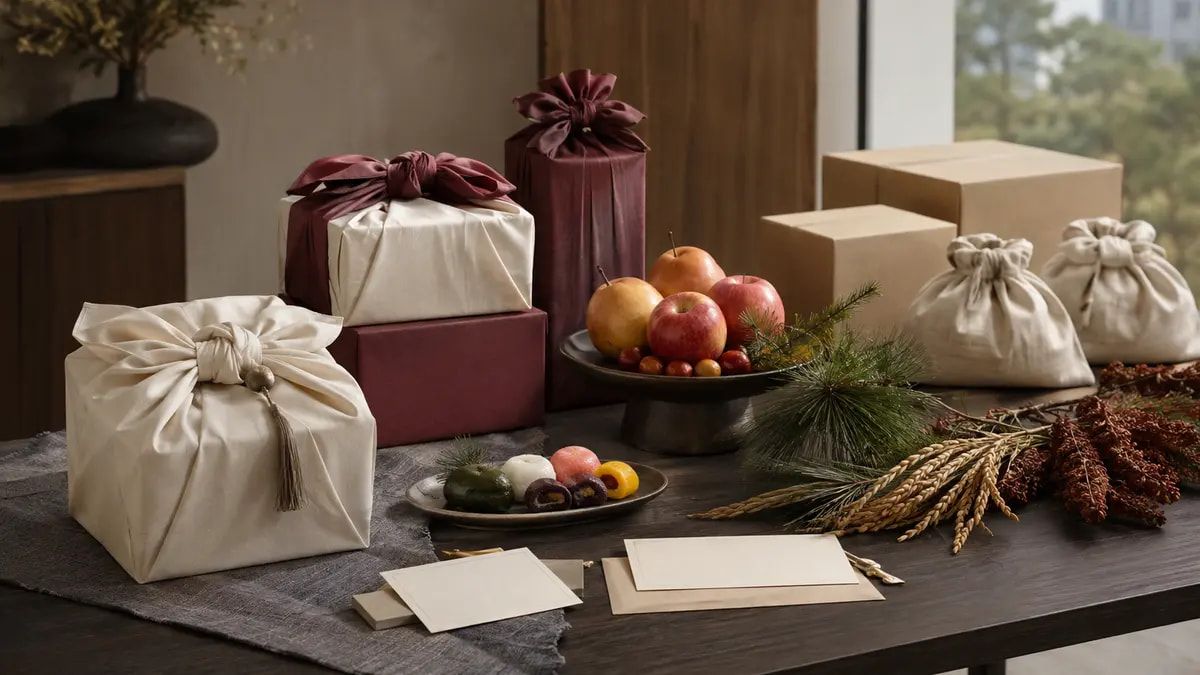
Figure 1. A Chuseok program should combine culturally attentive presentation with practical, unbranded packaging and a reliable delivery plan.
What Chuseok means for corporate gifting
Seoul Metropolitan Government lists Chuseok on September 25, 2026, while the National Folk Museum of Korea describes the holiday as the full-moon day of the eighth lunar month and one of Korea’s major annual observances. That context matters. Chuseok is rooted in harvest, family gathering, gratitude, food, and remembrance; it should not be reduced to a generic sales event.
“Korean Thanksgiving” can be a useful rough explanation for an unfamiliar English-speaking stakeholder, but it is not a substitute for the Korean name or its distinct customs. In the brief, approval deck, recipient message, and supplier instructions, lead with Chuseok or 추석. Explain the holiday in one sentence, then focus on what the recipient will actually experience.
A successful program does three things at once. It acknowledges the occasion without pretending the sender is an authority on Korean tradition. It chooses a gift that fits the relationship and the recipient’s practical circumstances. And it creates enough operational margin that a delay, unavailable item, wrong address, or dietary exception can be fixed before the holiday.
The gift itself is only one part of that experience. Timing, the sender name, message quality, packaging, delivery privacy, and the way exceptions are handled are equally visible. An expensive item delivered after the recipient has left for the holiday can feel less considerate than a modest, useful item that arrives cleanly and on time.
The best Chuseok program is not the most elaborate one. It is the one in which the recipient understands the gesture, can use or share the gift, and does not have to solve a delivery problem for the sender.
Start with a recipient policy, not a catalog
Before browsing products, define who qualifies, why they are receiving a gift, what business purpose the program serves, and which rules apply. A single spreadsheet labeled “Korea gifts” is rarely enough. Employees, clients, prospects, channel partners, executives, contractors, and public-sector contacts create different approval, privacy, and relationship risks.
Build recipient tiers around the relationship rather than prestige. Employees may benefit from broad choice, household usefulness, and equitable value. Strategic clients may warrant personalization tied to the account relationship. Partners may need a consistent gesture that does not imply favoritism. Prospects require restraint because a gift should not be used to manufacture an obligation. Executives may have employer policies that prohibit or cap gifts. Public-sector recipients require separate review before anything is ordered.
The policy should answer six questions:
- Who is eligible, and who is explicitly excluded?
- What is the approved value range for each audience?
- Who approves the recipient list and final spend?
- How will addresses, phone numbers, preferences, and consent be collected?
- Which categories require an exception review?
- What happens when a recipient declines, cannot be reached, or receives a damaged item?
Keep the reason for each recipient in a reviewable record. For clients and partners, tie the gift to a legitimate relationship milestone or holiday appreciation—not a pending decision. For employees, check whether the program interacts with payroll, recognition policy, or local benefits treatment. The employee rewards tax compliance framework can help teams assign responsibilities, but local finance, payroll, and legal owners remain accountable for their decisions.
Segment audiences without creating visible inequity
Segmentation helps operations, but it can damage trust when the logic is arbitrary or obvious to recipients. Use a small number of defensible tiers and make the difference functional. For example, one tier may offer a broader choice set because executives or client contacts have stricter policies; another may use a standard household gift because it is being sent to a large employee population.
| Audience | Primary objective | Recommended design | Main risk control |
| Korea-based employees | Appreciation and shared holiday value | Choice among useful household, food, or wellness options | Equal value within comparable employee groups |
| Remote employees’ households | Inclusion despite varied locations | Address-confirmed local delivery or recipient choice | Consent, household suitability, delivery accessibility |
| Active clients | Relationship appreciation | Curated local gift with short account-specific message | Employer gift policy and conflict review |
| Channel or service partners | Partnership recognition | Consistent tier with clear sender identity | Avoid quid-pro-quo timing |
| Executives | Respectful, low-friction gesture | Compact premium item or choice-based option | Personal preference and employer limits |
| Public-sector contacts | Only when expressly cleared | Often a message without a gift | Current anti-graft rules and institutional policy |
Table 1. Audience design matrix. Use it to make the reason for value differences explicit before procurement.
Avoid using job title alone as the value rule. If two colleagues compare their gifts, the program should still make sense. If different client tiers are necessary, document the business basis internally but do not place tier language in recipient-facing messages or packaging.
A choice-based program can reduce risk when preferences vary. Choice is especially useful for dietary needs, small homes, frequent travel, alcohol restrictions, or recipients who would rather receive a practical item. Choice should remain curated: too many options turn appreciation into a shopping task.
Choose gifts that fit the occasion and the recipient
Traditional Chuseok gifts often emphasize food, harvest, family sharing, and practical abundance. That does not mean every corporate recipient wants the same fruit box, meat set, oil set, or health product. The relevant principle is shareability and usefulness, not copying a stereotype.
Good starting categories include high-quality fruit, tea, snacks, shelf-stable pantry goods, wellness items, home goods, and locally sourced sets. Premium packaging can elevate a modest gift, but oversized boxes and excessive filler create disposal burdens. For hybrid teams, a compact gift that can be carried home may outperform a heavy office delivery.
Evaluate each option against five criteria: cultural fit, recipient fit, delivery resilience, policy fit, and total landed cost. A perishable item may be culturally resonant but fragile during peak-volume delivery. A high-value item may look generous but violate an employer rule. A cross-border specialty item may be distinctive but introduce customs documentation and uncertain arrival.
Use a scored selection sheet:
| Criterion | Weight | Question |
| Recipient usefulness | 30% | Can most recipients use, share, or easily exchange it? |
| Delivery resilience | 25% | Will it survive peak-season storage, handling, and delay? |
| Cultural appropriateness | 20% | Does it recognize Chuseok without caricature or assumption? |
| Policy and compliance fit | 15% | Is the category and value acceptable for the audience? |
| Waste and presentation | 10% | Is the packaging proportional, recyclable where possible, and easy to handle? |
Score every finalist using the same evidence. Do not let a photogenic sample override a weak shelf-life, substitution, or delivery plan.
Handle food, alcohol, and sensitive categories deliberately
Food gifts can be warm and shareable, yet they create more exceptions than a generic product page reveals. Capture allergies, dietary restrictions, refrigeration needs, shelf life, origin, and ingredient labeling before approving an item. Do not infer that a recipient eats meat, consumes alcohol, or wants a traditional health product.
Open the exception checklist for higher-risk gift categories
Food: confirm allergens, storage temperature, expiry window, ingredient information, and the supplier’s replacement process. Avoid a delivery date that leaves perishables unattended during travel.
Alcohol: verify age, employer policy, cultural or religious preference, delivery acceptance, and applicable local rules. Always provide a non-alcohol alternative of comparable value.
Public-sector recipients: consult the current guidance of Korea’s Anti-Corruption and Civil Rights Commission and the recipient institution’s policy. Do not rely on a copied monetary limit from an old article or supplier sales page.
Cross-border goods: confirm import eligibility, origin marking, recipient identification needs, duties, taxes, and who acts as importer. High-friction food, plant, animal, cosmetic, or health-product categories deserve specialist review.
When a category cannot be cleared confidently, change the gift—not the evidence standard. A locally fulfilled, low-friction item or recipient-choice format is usually safer than trying to force an exception through a peak-season logistics network.
Protect addresses and recipient choice
A Chuseok campaign commonly needs a home address and mobile number because many recipients are away from the office. Those details are not merely shipping fields; they are personal data. Collect only what is needed, explain the purpose, restrict access, set a deletion timetable, and avoid exposing the list across vendors or internal teams.
Prefer a recipient-claim flow when the sender does not already have a verified delivery address. The recipient receives a clear invitation, chooses or confirms a gift, supplies the delivery details directly, and sees a privacy notice. This reduces stale-address errors and prevents account teams from passing personal data through email and spreadsheets.
The operating owner should decide:
- Whether the invitation identifies the sender and business purpose clearly.
- How long the claim window remains open.
- Which countries or Korean regions are eligible.
- What happens when a recipient does not respond.
- When address data will be deleted or returned by the supplier.
- Who can see gift value, recipient choices, and delivery status.
- How opt-outs and future contact preferences are recorded.
Do not make acceptance feel mandatory. Employees should not need to disclose a sensitive preference to a manager. Clients should be able to decline without a follow-up sales conversation. A neutral “decline” or “not now” path preserves the meaning of the gesture.
Work backward from September 25, 2026
As of September 1, 2026, a nationwide 2026 Chuseok parcel cutoff was not found on the official Korea Post site. Carrier networks may publish route-specific notices later, and commercial carriers may use different acceptance windows. The dates below are therefore internal planning recommendations, not official carrier deadlines. Verify each route before promising arrival.
| Internal window | Required decision or action | Exit evidence |
| September 1–3 | Freeze audience, eligibility, value rules, local versus cross-border route, and public-sector exclusions | Approved recipient policy and accountable owners |
| September 4–7 | Confirm budget, inventory, dietary options, address-consent flow, packaging, and supplier capacity | Purchase approval and tested recipient flow |
| September 8–11 | Approve samples, artwork, messages, substitution rules, and final quantities | Signed proof and locked bill of materials |
| September 12–15 | Place domestic bulk orders and confirm route-specific carrier acceptance dates | Supplier acknowledgment and shipment plan |
| September 16–18 | Resolve bad addresses, late declines, unavailable items, and damaged sample issues | Exception queue below agreed threshold |
| September 21–24 | Track, communicate only verified status, and deploy local replacement stock | Daily delivery report and named escalation owner |
| September 25 | Holiday; avoid creating recipient work | Support only for genuine exceptions |
Table 2. Backward plan for a September 25 Chuseok. Move milestones earlier for customization, food, remote regions, or cross-border shipping.
This schedule intentionally creates slack. If the supplier requires personalization, custom packaging, or assembly, add the production lead time before the order date. If the recipient list is still moving, split it into a committed core batch and a controlled late-addition process rather than delaying the entire program.
The Global Corporate Gifting Lead-Time Index 2026 offers a broader framework for route complexity. Use it to challenge optimistic assumptions, then obtain an actual commitment from the supplier and carrier handling the Korea route.
Prefer local fulfillment when certainty matters
Local Korean sourcing and fulfillment usually reduce customs friction, shorten recovery time, and improve product familiarity. Cross-border fulfillment can make sense when the gift has a specific brand connection or when a regional program needs consistent inventory, but consistency is not valuable if the item arrives late or the recipient must complete an unexpected customs step.
Use four questions to choose the route:
- Can the item be sourced in Korea with the required quality and presentation?
- Does the cross-border item justify the added customs and timing risk?
- Who owns duties, import documentation, recipient communication, and failed delivery?
- Can a local replacement be dispatched if the primary route fails?
For personal imports, the Korea Customs Service personal customs clearance code guidance explains the use of a personal customs clearance code for residents and foreign e-commerce goods. Its postal clearance guidance also distinguishes personal gifts from commercial goods and describes circumstances in which formal clearance may apply. A company shipment should not be labeled or structured as a personal gift merely to obtain simplified treatment.
Confirm product eligibility, declared value, origin marking, importer responsibilities, and recipient identification with the official guidance and your customs provider. Customs classification and tax treatment depend on the facts; this article does not replace a broker, tax adviser, or legal review.
Design the message and presentation with restraint
The recipient message should identify the sender, name Chuseok, express appreciation, and avoid claiming cultural intimacy the sender does not have. A global headquarters can write respectfully without imitating ceremonial Korean language. Local teams should review Korean copy for tone and hierarchy.
A useful English message is short: “Wishing you and those close to you a peaceful Chuseok. Thank you for your partnership this year.” For employees, appreciation can be specific to shared work. For clients, avoid sales language, renewal references, or requests for a meeting in the same note.
Presentation should feel intentional but not theatrical. Use clean wrapping, a small message card, the correct recipient name, and packaging that protects the item. Do not add faux calligraphy, symbols, or historical motifs merely to appear Korean. If using a traditional wrapping technique or design, work with a knowledgeable local supplier and describe it accurately.
Approval should include the exact card copy, sender name, reply channel, packaging proof, and mobile notification text. A correct physical gift can still create confusion if the delivery message looks like spam or the sender is not recognizable.
Build a budget around total landed cost
The catalog price is not the program budget. Total landed cost includes product, packaging, personalization, picking, address collection, storage, delivery, duties and taxes where applicable, payment fees, replacement stock, customer support, and internal coordination.
Use this model:
approved program budget
= recipient count × expected accepted rate × unit landed cost
+ fixed creative and setup cost
+ replacement reserve
+ contingency for late additions and route changes
Estimate an accepted rate instead of assuming every invite converts. Separate fixed from variable cost so the team can see whether a late audience increase is affordable. For food or fragile items, replacement reserve should reflect actual damage and delivery experience, not a generic percentage.
Budget approval should also define what can change without returning to leadership. The operator may be allowed to substitute an unavailable flavor within the same category and value, but not to switch from food to alcohol or raise the per-recipient value. Clear tolerances turn inevitable peak-season exceptions into controlled decisions.
Create an exception queue before launch
Every large campaign produces exceptions. The mistake is treating each one as a surprise. Create categories, owners, response times, and approved resolutions before invitations or parcels are sent.
| Exception | First owner | Standard response |
| Invalid or missing address | Campaign operations | Ask recipient to correct through secure form; never expose the full list |
| Recipient declines | Relationship owner | Record decline; no pressure or substitute unless requested |
| Item unavailable | Procurement | Use preapproved equivalent or allow recipient to reselect |
| Delivery delayed | Logistics | Share verified status and recovery date; do not guess |
| Damaged or spoiled item | Supplier support | Apologize, replace locally, and preserve evidence for supplier review |
| Policy concern | Compliance owner | Pause recipient; document decision before fulfillment |
| Customs request | Customs owner or broker | Verify legitimacy and provide only required data through approved channel |
Table 3. Exception ownership keeps account managers from improvising policy during a peak week.
Run a daily exception review from the first invitation through the final delivery. Track open age, promised response, responsible owner, and resolution. Escalate patterns: five incorrect addresses may indicate a list problem; repeated damage may require repacking the remaining inventory.
Measure respect and execution, not just delivery
A delivered parcel is not automatically a successful program. Measure program health across consent, experience, operations, and commercial relevance.
Core operational measures include invitation delivery, claim rate, valid-address rate, on-time delivery, first-attempt success, damage rate, replacement rate, support contacts, and average resolution time. Experience measures can include recipient satisfaction, preference coverage, and qualitative feedback. Commercial teams may track whether strategic relationships acknowledged the gesture, but should not attribute pipeline or renewal outcomes to a gift without a defensible method.
Segment results by route, supplier, audience, category, and region. Avoid publishing recipient-level acceptance or preferences broadly. For employees, do not turn gift selection into a performance signal. For clients, separate appreciation operations from sales scoring.
Use the Global Corporate Gifting Operations Hub to connect approvals, data handling, procurement, logistics, and measurement into one control model. After Chuseok, hold a short retrospective while delivery records are still available and convert the findings into next year’s lead-time assumptions.
A final launch checklist for September 2026
Before the program moves from plan to purchase, the accountable owner should be able to check every line:
- September 25, 2026 is recorded as the holiday date, and all internal milestones are earlier.
- Recipient groups, eligibility, exclusions, and value rules are approved.
- Public-sector and high-risk recipients are separated for current-policy review.
- The product has passed usefulness, delivery, cultural, policy, and waste criteria.
- Food, alcohol, allergy, shelf-life, and temperature issues have alternatives.
- Recipient data is collected with clear purpose, limited access, and deletion timing.
- Domestic and cross-border routes have named owners and verified carrier commitments.
- Customs, origin, and recipient-identification requirements are confirmed where relevant.
- The exact Korean and English recipient messages have been locally reviewed.
- Substitutions, declines, damage, late additions, and failed deliveries have preapproved responses.
- Tracking reports distinguish shipped, in transit, delivered, failed, replaced, and closed.
- A local replacement reserve exists for the highest-value relationships and employee exceptions.
- The post-program review has an owner and a date.
If any critical box is open after the supplier’s safe order date, reduce scope or choose a lower-friction format. A smaller program with reliable local execution is better than a broad campaign built on unverified promises.
Plan a Chuseok gesture people can receive with ease
A respectful Chuseok gift begins with the recipient, not the catalog. Name the occasion accurately, make choice and refusal easy, keep value rules defensible, protect personal data, and leave enough time for local delivery and recovery. The 2026 date is fixed; carrier capacity, inventory, addresses, and recipient circumstances are not.
The practical decision is therefore to optimize for certainty. Use local fulfillment where it improves reliability, treat cross-border shipping as a controlled exception, and never turn an official-source gap into a confident deadline. Document what was verified on September 1, 2026 and recheck carrier, customs, anti-graft, and employer rules before launch.
Giftpack can serve as the execution layer for curated choice, recipient address collection, high-volume ordering, delivery tracking, and exception handling across a Chuseok campaign. Your Korea, legal, tax, payroll, privacy, and procurement owners still decide what is culturally appropriate and permitted; Giftpack helps carry those approved decisions through to delivery.