
That matters because event follow-up is where many expensive events lose momentum. A booth scan, dinner guest list, webinar attendee list, or executive roundtable RSVP is not pipeline by itself. The commercial value comes from what happens next: whether the right person receives the right follow-up at the right time, whether sales has context, whether the experience feels personal, and whether the team can measure outcomes beyond "we sent something."
Giftpack is built for this kind of incentive infrastructure. It combines AI incentive decisioning, workflow automation, global sourcing, customization, fulfillment, and reporting so enterprise teams can decide, execute, and measure relationship moments globally. For event teams, that means gifts become part of a governed revenue workflow rather than disconnected swag spend.
The Short Answer
B2B event gift automation is the process of triggering personalized gifts, swag, or follow-up rewards from event activity and routing them through eligibility, approval, fulfillment, and measurement workflows.
Strong programs usually include:
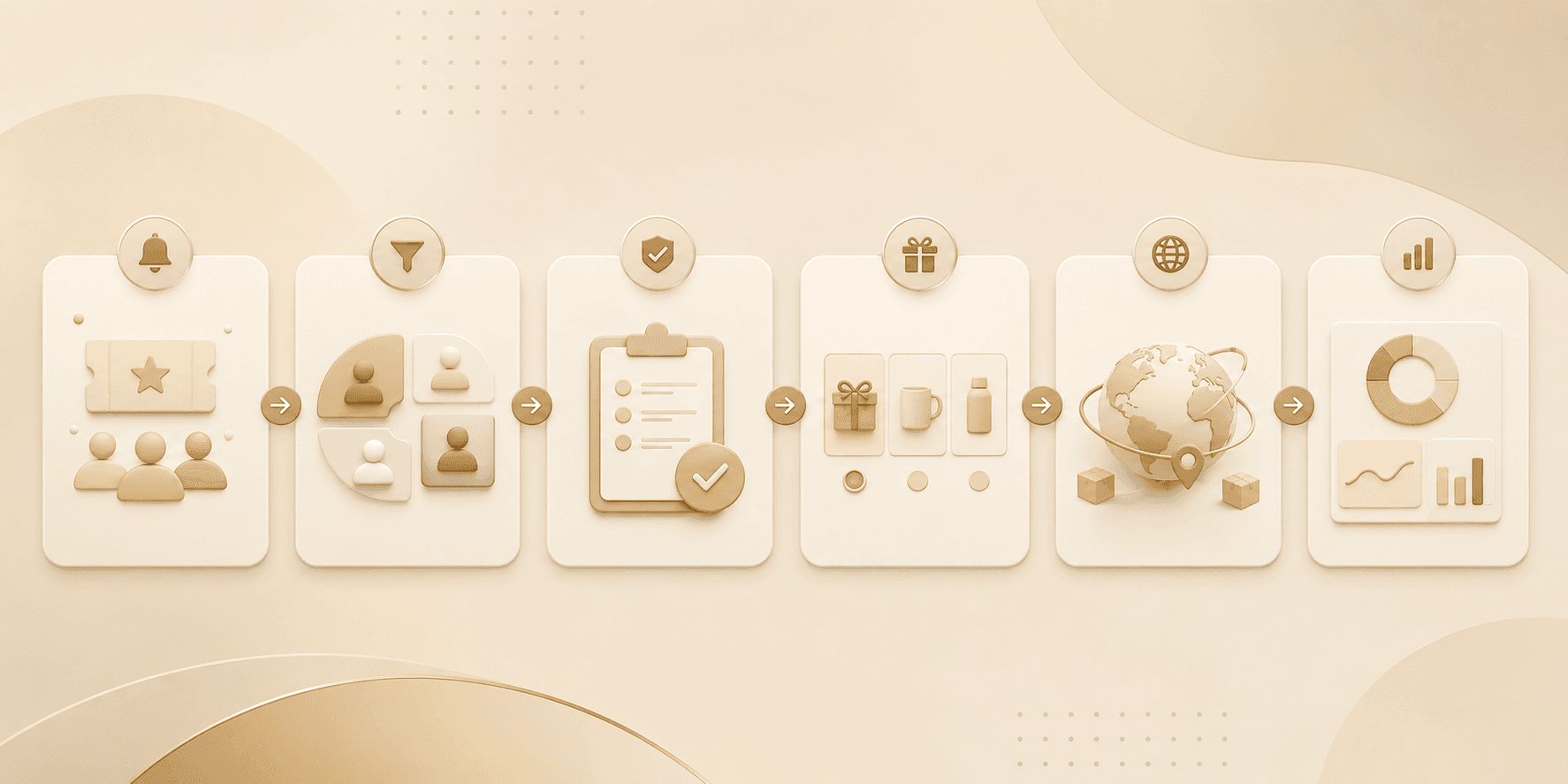
- event and CRM triggers
- account and persona segmentation
- approved gift and swag collections
- value bands by account tier or relationship stage
- recipient choice and address capture
- global fulfillment and exception handling
- sales and customer success visibility
- reporting on meetings, opportunities, retention, expansion, and influenced pipeline
The goal is not to send more gifts. The goal is to make event follow-up faster, more relevant, easier to govern, and easier to measure.
Why Event Gifts Often Fail To Create Revenue Impact
B2B events are expensive. Teams invest in sponsorships, booths, travel, dinners, executive meetings, webinars, customer summits, roadshows, field events, partner events, and private roundtables. Yet the follow-up layer is often the weakest part of the program.
The common pattern looks familiar. Marketing buys swag before the event. Sales scans badges. Field marketing exports attendee lists. Someone ships leftover items to hot accounts. A sales rep sends a generic email. A few high-priority contacts get special handling, but most follow-up is inconsistent. Weeks later, the team struggles to connect event spend to pipeline movement.
The problem is not that events do not work. The problem is that event interest decays when follow-up is slow, generic, or operationally fragmented. Public event marketing research has continued to point toward the same direction: attendees expect more personalized experiences, event teams are under pressure to prove impact, and follow-up timing matters.
Giftpack's role is to help teams operationalize that moment. When a valuable interaction happens, the system can trigger a governed gift or reward workflow that fits the account, buyer, region, event type, and desired outcome.
What Counts As An Event Gift Workflow?
An event gift workflow is any structured process that uses a gift, branded item, experience, or reward to support an event-related business objective.
Common examples include:
- pre-event meeting booking gifts for target accounts
- executive dinner follow-up gifts
- booth conversation follow-up for qualified accounts
- post-webinar education completion rewards
- customer summit appreciation gifts
- partner event certification rewards
- field event thank-you gifts
- ABM gift drops tied to event attendance
- renewal or expansion follow-up after customer advisory sessions
- global attendee kits for virtual or hybrid events
The workflow should define the trigger, audience, gift options, value band, approval path, fulfillment process, and measurement plan. Without those pieces, the program becomes a shipping task rather than a revenue workflow.
The Difference Between Event Swag And Event Gift Automation
Event swag is usually inventory-led. A team orders items, distributes them at a booth, and hopes the brand impression lasts.
Event gift automation is workflow-led. The team starts with the business moment and asks:
- Who should receive something?
- What action or relationship signal triggered it?
- What is the right value band?
- Should the recipient choose the item?
- Does the gift support a meeting, follow-up, retention, education, or advocacy goal?
- How will fulfillment work across regions?
- How will the outcome be measured?
Swag still has a place. A useful booth item can help brand recall. But for enterprise teams, the bigger opportunity is to connect event gifting to systems and outcomes. That is where Giftpack's incentive workflow automation framework becomes relevant.
Use Cases For B2B Event Gift Automation
1. Pre-Event Meeting Acceleration
Before a major conference, sales and marketing teams often identify target accounts they want to meet. The usual outreach is crowded: calendar links, booth invites, dinner invitations, and generic "will you be there?" emails.
A governed gift workflow can make the outreach more thoughtful without becoming gimmicky. For example, a target executive can receive a modest pre-event coffee, travel-friendly item, or choice-based reward tied to a meeting invitation. The gift should be positioned as hospitality, not pressure. The workflow should only trigger for approved account tiers and must respect procurement, compliance, and anti-bribery policies.
The operational flow:
- ABM or sales selects target accounts.
- CRM checks account tier, region, and contact role.
- The system applies a pre-approved value band.
- Giftpack sends a recipient-choice link or curated item.
- Meeting status, attendance, and opportunity movement are tracked.
This approach is especially useful when teams want to increase meeting quality rather than simply increase booth traffic.
2. Qualified Booth Conversation Follow-Up
Not every booth scan deserves a gift. The strongest workflows separate casual scans from meaningful conversations.
A good trigger might be a sales-qualified conversation, a product demo completed, a target account with buying committee fit, or a high-intent question logged by the rep. The reward can be a post-event thank-you, a relevant educational kit, or a small personalized item that reinforces the conversation.
The workflow should capture:
- event name
- contact role
- account tier
- conversation quality
- next step
- rep owner
- selected gift
- fulfillment status
- follow-up outcome
This prevents the team from spending on every badge scan while giving sales a more memorable way to continue the right conversations.
3. Executive Dinner And Roundtable Follow-Up
Executive events are relationship-heavy and attendance is often limited. A thoughtful post-event gift can extend the conversation, especially when it connects to the theme of the dinner or the attendee's role.
The risk is that these gestures often depend on manual coordination. One region handles it beautifully, another forgets, and another sends an item that does not fit the audience.
Giftpack can help standardize the workflow without making the experience generic:
- approved premium collections by event type
- host or field marketer notes
- value bands by attendee segment
- regional fulfillment options
- exception handling
- CRM sync for follow-up
This is the difference between a one-off executive gesture and a repeatable relationship motion.
4. Webinar And Virtual Event Follow-Up
Virtual events produce large lists, but not all engagement is equal. A gift workflow should not reward passive attendance alone. Better triggers include:
- attending a strategic session live
- asking a qualified question
- completing a post-event assessment
- requesting a demo
- attending multiple sessions in a series
- joining a customer education program
For lower-value or broad follow-up, teams can use digital resources and sales routing. For higher-intent segments, a carefully governed gift or reward can create a more personal next step.
This is particularly useful for enterprise webinars where the goal is not mass attendance, but qualified conversation.
5. Customer Summit And Advocacy Moments
Customer events are not only demand generation. They can support retention, expansion, advocacy, education, community, and executive relationships.
Gift workflows can support:
- customer speaker appreciation
- advisory board participation
- executive sponsor follow-up
- certification or education completion
- renewal and expansion relationship moments
- community contributor recognition
For compliance-minded customer appreciation, teams should keep gifts modest, optional, policy-approved, and disconnected from review pressure or renewal commitments. Giftpack's guide to customer advisory board gift policy is a useful companion for this type of workflow.
How To Build A Governed Event Gift Automation Program
Step 1: Define The Event Moment
Do not start with the gift. Start with the event moment.
Examples:
- pre-event meeting request
- meeting booked
- meeting attended
- booth demo completed
- executive dinner attended
- webinar question submitted
- customer speaker confirmed
- roundtable follow-up requested
- partner certification completed
Each moment should map to a business objective. Is the goal to book meetings, deepen executive relationships, accelerate open opportunities, recognize customers, support retention, or improve event satisfaction?
Step 2: Segment By Account And Relationship Context
A one-size-fits-all approach wastes spend. Segment by:
- target account tier
- customer versus prospect
- opportunity stage
- buying committee role
- event type
- region
- strategic value
- compliance sensitivity
- sales owner
This segmentation should feed both the gift recommendation and the approval path.
Step 3: Create Value Bands
Value bands prevent event gifting from becoming inconsistent or hard to explain.
Example bands:
- low-value broad follow-up for qualified attendees
- mid-value gifts for target-account meetings or customer education
- premium gifts for executive dinners, advisory boards, or strategic customers
- restricted categories requiring legal or procurement review
Each band should define eligible audiences, approved use cases, budget owner, approver, and reporting requirements.
Step 4: Use Recipient Choice Where It Improves Fit
Event teams often guess incorrectly on sizes, preferences, shipping addresses, dietary needs, or regional availability. Recipient choice can reduce waste and improve experience.
Instead of shipping the same item to every attendee, teams can offer a curated set of approved options. The recipient chooses what fits, while the company maintains budget and brand control.
This is especially valuable for global events because fulfillment constraints vary by country.
Step 5: Connect To CRM And Event Systems
Automation only works if the trigger data is connected. Common sources include:
- event registration platforms
- badge scan tools
- webinar platforms
- CRM campaigns
- marketing automation
- sales engagement platforms
- customer success platforms
- partner portals
The goal is to make the gift workflow visible in the same systems where revenue teams already work. That allows sales to see gift status, marketing to track campaign influence, and operations to manage exceptions.
Step 6: Measure More Than Redemption
Redemption matters, but it is not enough. For event gift automation, measure:
- meetings booked
- meetings attended
- follow-up response rate
- opportunity creation
- opportunity progression
- customer satisfaction
- renewal or expansion signals
- event-influenced pipeline
- cost per qualified follow-up
- fulfillment time
- exception rate
- regional delivery success
Giftpack's incentive spend dashboard requirements offers a useful framework for deciding what finance, procurement, marketing, and revenue teams should see in one operating view.
What Procurement And Finance Need From Event Gift Automation
Event gifting often starts as a marketing idea and becomes a procurement problem. Teams need vendors, inventory, shipping, tax considerations, approval paths, and budget reporting. When programs scale globally, the complexity increases quickly.
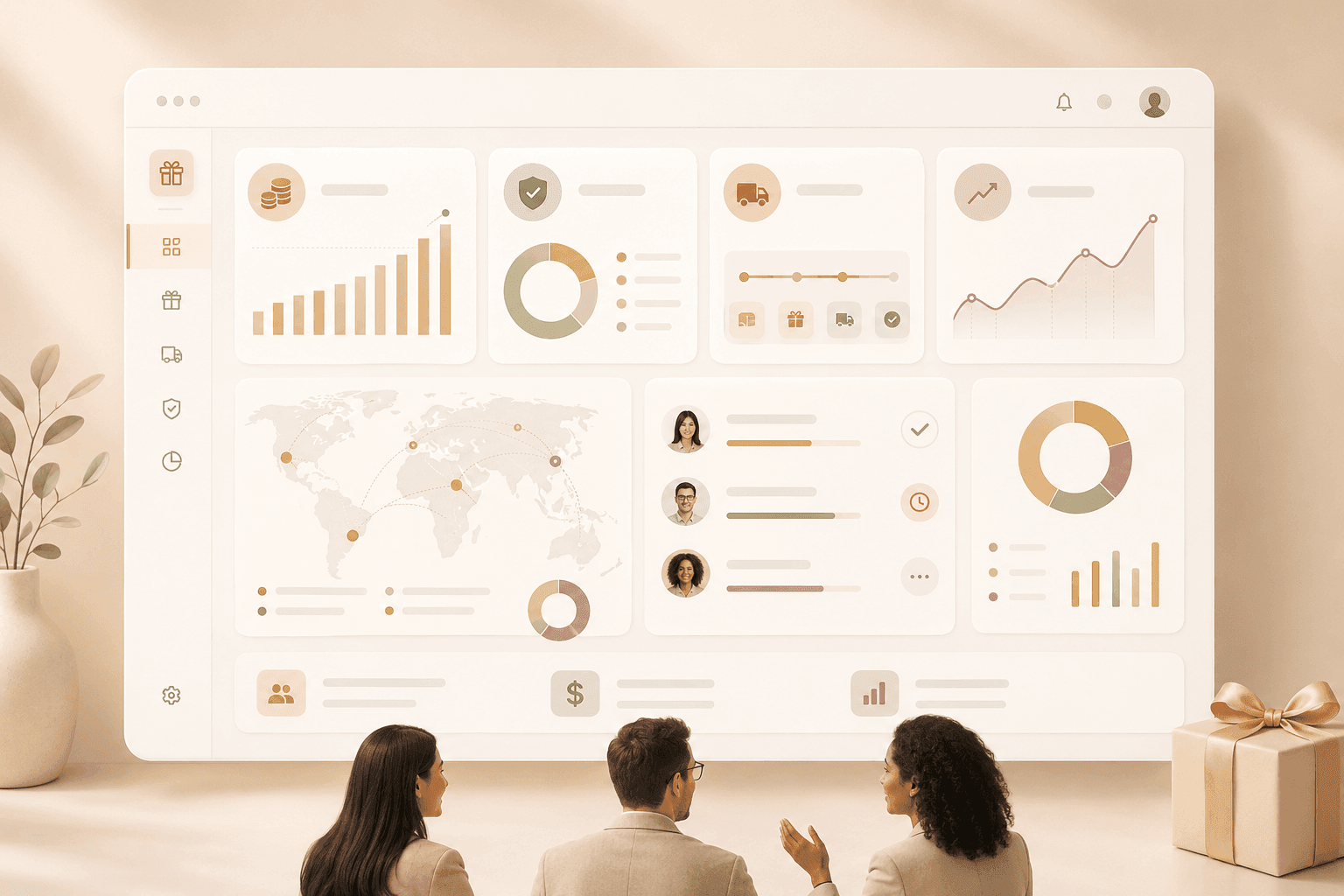
Procurement and finance usually need answers to practical questions:
- Which events are using gifts?
- Which teams are spending?
- Which vendors are involved?
- What is the spend by region, campaign, and account tier?
- Are value bands being followed?
- How many exceptions occurred?
- What fulfillment issues affected the recipient experience?
- Which programs influenced pipeline or customer outcomes?
Centralized incentive infrastructure helps turn these questions into standard reporting instead of manual reconciliation. It also helps reduce fragmented vendor spend, one-off local purchasing, and inconsistent brand quality.
Common Mistakes To Avoid
Sending Gifts To Every Lead
Not every attendee deserves the same follow-up. Broad gifting creates waste and weakens measurement. Use qualification criteria and reserve higher-value gestures for high-intent or high-value moments.
Waiting Too Long
Event context fades quickly. If the gift arrives weeks after the conversation, the emotional and commercial relevance declines. Automate triggers so the workflow starts while the interaction is still fresh.
Treating Gifts As A Substitute For Sales Follow-Up
A gift should support the next conversation, not replace it. Sales still needs context, timing, and a relevant reason to engage.
Ignoring Regional Fulfillment
Global attendees do not all have the same shipping constraints, product availability, customs rules, or delivery expectations. A global execution layer matters.
Measuring Activity Instead Of Outcomes
"We sent 300 gifts" is not a business outcome. Track what happened after the gift: meetings, replies, opportunities, satisfaction, retention, or expansion.
How Giftpack Helps
Giftpack helps enterprise teams turn event gifts from fragmented spend into governed incentive workflows.
With Giftpack, teams can:
- trigger gifts from event and CRM activity
- use AI-supported decisioning to recommend the right reward type
- apply value bands, approvals, and eligibility rules
- offer recipient choice within approved collections
- handle global sourcing, customization, fulfillment, and support
- sync outcomes and reporting back to revenue systems
- give finance, procurement, marketing, and sales one clearer operating view
This is especially important for organizations running events across regions, business units, and audience types. Giftpack helps teams keep the human warmth of a thoughtful follow-up while making execution scalable, governed, and measurable.
Final Takeaway
B2B events create moments of attention. Event gift automation helps teams convert those moments into relationship workflows that sales, marketing, customer success, finance, and procurement can trust.
The strongest programs do not send gifts randomly. They trigger the right gesture from the right event signal, route it through the right controls, fulfill it globally, and measure whether it moved the relationship forward.
For enterprise teams, that is the difference between swag spend and incentive infrastructure.